



Demand has never been higher for cruises, yet fuel costs have skyrocketed since Leeroy Jenkins entered the Strait of Hormuz.
The cruise industry purportedly wants to achieve net-zero emissions by 2050, citing technological investment and “sustainable fuels” as the path forward. Yet the vast majority of cruise ships burn high sulfur fuel oil (HSFO). Scrubbers let ships burn this fuel, which can contain up to 3.5% sulfur, while still meeting the International Maritime Organization’s 0.5% cap that took effect in 2020. In actuality, “scrubbing” redirects the sulfur and contaminants, including various heavy metals, from the air to the ocean. A 2024 meta-analysis by Pacific Environment concluded that “scrubber discharge is extremely toxic to marine life at very low concentrations.”
A small proportion of cruise ships burn very low sulfur fuel oil (VLSFO), which contains up to 0.5% sulfur. This fuel, also dirty and unsustainable, meets the 0.5% cap by default, which is why it trades at the benchmark price for marine fuel. On average, VLSFO nearly doubled between January and May of 2026. The shipping industry refers to all marine fuel prices as bunker prices, a holdover from when coal was stored in bunkers on ships. Marine gas oil (MGO) has trended slightly higher than the benchmark. Whether ships burn HSFO with scrubbers (cheaper overall) or VLSFO without them, most can switch to the “cleaner” MGO when entering what are called Emission Control Areas, generally around ports or jurisdictions attempting to mitigate the poisoning.
Some cruise lines claim to be managing bunker price increases by “using less fuel.” One could almost feel a fleeting pity for these economic hostages, if they didn’t make it sound like they could’ve used less in the first place.
Cruises also incubate emergent diseases. Every time a passenger twerks for their well-adjusted instagoondom, the entire world plays Russian roulette over the next non-funny Trainwreck: Poop Cruise sequel. What kind of sick freak would watch the one where an outbreak spreads from a strain of hentaivirus hantavirus mutating on a cruise ship? With the right jump cuts and musical score, I honestly would. At least I don’t watch true crime.
While we’re radically redefining the world order, I propose a solution to all of the problems plaguing the cruise industry. It would meet their sustainability goals way ahead of schedule, but I’m not sure if they’d agree to it. Here goes: all cruise ships (and superyachts) using unsustainable fuels cease operation. Please clap. The super polluters could even be converted into housing for the needy, financed by retroactive social and environmental harm fines against the industry. Disincentivization of other exploitative and extractive ventures comes as a bonus. Anyone who can afford to destroy our environment can afford to pay for it. Right?
“But existential threats are good for the economy!”
It’s regrettable that people’s jobs depend on seafaring biohazards. It was also regrettable for the women whose jaws sloughed off painting radium dials, the coal miners who strained for their last breath, and the kids whose brains were rotted by leaded gasoline decades before the Internet took over the assignment. Industries exist by privilege, not by right. Insofar as hospitality confers goodwill, exist it should.
Santiago de Compostela, Spain, where I live, is the hub for tourists flowing in and out of the Camino de Santiago. It doesn’t get much better than buying locally while breathing fresh air, exercising, and socializing. By comparison, the sickening decadence of the cruise industry lies within the ever-widening chasm between real life and ziplining drunk — with an undisclosed heart murmur — into a strobing wave pool synchronized to a mumble rap remix of I Kissed a Girl by xX DJ GOAT Slayer 69 Nocap 420 Xx, who only drinks fluoride-free mouthwash. Echoing nearby is a self-described mystic with AI psychosis delivering a sermon on Bigfoot being the manifestation of the “divine feminine.” A divorced dad, energized by the sermon, insults the English language skills of a Filipino spa therapist named Rosita while attempting to barter with her for a discreet favor.
The patrons are en route to a luxury planned community where they can take a breather, segregated from the people who make them feel uncomfortable no matter where they are.
But here’s an alternative breather: hiking, or just being in a park. It’s challenging yet restorative because it reclaims attention from endless distraction, instilling a sense of control. Contrast that with paying rent to an industry that respects our oceans with the care Bigfoot would apply, after ten consecutive bean burritos, to the microecosystem of a condemned gas station toilet in remote Appalachia. Each year, one billion gallons of sewage, with varying levels of “treatment,” are dumped into a much more consequential ecosystem… THE FUCKING OCEAN.
So is it all right if I dump my sewage in your home?
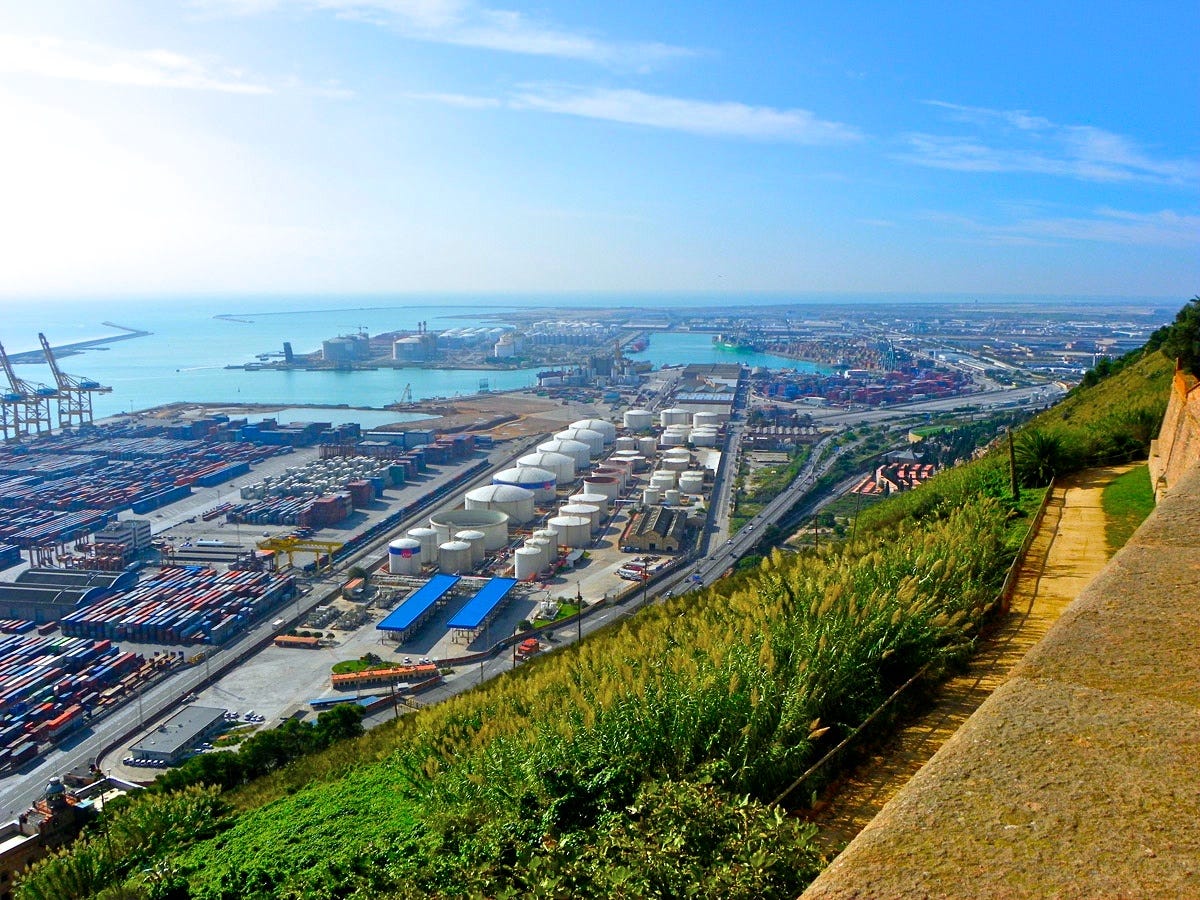
Didn’t mean to catch you off-guard. Please understand: my sewage has to go somewhere. Stop being so selfish. Oh, your home is your property, huh? Or your landlord’s, at least. But then who owns the ocean? The cruise industry defiles it day in, day out, and the air too. A report by Transport and Environment found that “214 cruise ships emitted 509 tonnes of SOₓ [sulfur oxide], 19,125 tonnes of NOₓ [nitrogen oxide] and 448 tonnes of PM2.5 [particulate matter] around European ports” in 2022. That’s not to mention the CO₂ (carbon dioxide), CH₄ (methane), diesel PM, and soot, all detailed in the same report. Barcelona ranked as Europe’s most cruise-polluted port city. Is economic stimulation worth the cost of cardiovascular and respiratory disease? Certainly not to those affected.

At the same time, cruise line workers are just people trying to make a living. Like everyone else, they sustain metaphysical injury to survive in an unjust world.
Hiding behind complexity
Science likes to control its variables. Labs are made for isolating them, controlling others, and observing changes. The atmosphere and ocean aren’t labs. They’re open systems where chaos reigns. It costs mountains of dinero to install and maintain sprawling sensor networks in these environments, plus millions of hours parsing interdependent variables out of the data. This is yet another way the cruise industry externalizes cost onto third parties: marine pollution research.
One initiative that comes close to placing the onus on the cruise industry for their ecological psychopathy is the Commercial Passenger Vessel Environmental Compliance (CPVEC) Program out of Alaska. It ensures compliance with rules regarding wastewater and other public health matters. The program doesn’t fund open-ended science, however, and may not catch everything lurking underneath a porcelain veneer.
The effects of dumping millions of gallons of sewage into the ocean are largely unknown amidst the countless uncontrolled variables. We as a society can control the dump-sewage-into-the-ocean variable, but our failure to do so invites the uncontrollable. Back in 2007, nominative determinism gifted us a study by Nickie Butt that found, “Cruise ships represent less than 1% of the global merchant fleet yet . . . they are responsible for 25% of all waste generated by merchant vessels.” Her findings long preceded the post-COVID cruise bonanza. Toxicology studies and marine die-offs permit us to extrapolate that shit’s much worse now.
And then there’s the labor exploitation. All workers know precarity, but Andrew L. Yarrow of the Milken Institute Review summarizes the distinctive features of the cruise line worker:
“Workers” may be a better term than “employees,” given that many jobs are contract positions typically lasting from 2 to 11 months. Cruise lines generally do not discuss pay and benefits, although Carnival and Royal Caribbean — both publicly traded companies — reported median compensation of around $15,000 in 2022. CruiseCritic discussion boards are filled with complaints of minimal pay and exploitative working conditions.
He emphasizes that these workers need not pay for food and housing, and furthermore that they can send much of their earnings back to their families in impoverished countries… families they rarely see as part of the deal. Everyone agrees that positives include travel and socializing, which many workers themselves emphasize, but what recourse is there for the negatives? The solution that the cruise industry found to minimize its liability is common to all industries: alienate workers from their own labor through shell companies, subsidiaries, and contractors incorporated wherever regulations are weakest.
Remember Rosita, our Filipino spa therapist, and the divorced dads she deals with? She is placed by Recruiting Company to work for a “concessionaire” called Hospitality Company; Hospitality Company has a contract with a CENSORED-incorporated subsidiary of Cruise Line Company, operating a ship that is in fact owned by another subsidiary under a corporate umbrella, let’s say General Cruise Line Corporation, based out of CENSORED. To confuse the situation further, the ship itself is most likely registered under a flag of convenience, a different country than where the owners operate.
The end result is a shifting Escherian labyrinth of jurisdiction that, combined with Rosita’s commission-dependent wages, means she puts more into the system than she gets back. The difference is profit, but not for her. The whole structure exists to minimize liability, taxes included, by design. Rosita and the rest of her “crew,” contracted through similarly mystifying arrangements, often pay more in taxes proportionally than the companies that profit from them.
What about the new pollution?
In addition to workplace democracy, what we really need is a new pollution, a clean form of pollution, because anyone who hasn’t already decided that cruises are weird and disgusting will probably not be persuaded by the information I’ve outlined so far. To those of you who are still on the fence, or who disagree with my framing but are notably still listening, I present to you a proverbial peace pipe e-cigarette, fruit-flavored and FDA-approved. [blows blue vapor out of nose] Yeah man, like, realistically, these floating Superfund sites are, at the very least, wheelchair-accessible. A grandparent on dialysis can go on a cruise with the rest of the family, simplifying the logistics of going somewhere as a group.
Cruises can be very affordable and accommodating. I’m not here to commit class warfare over activities that can be sources of joy and broadened perspectives for the whole family. Nobody should feel bad just because I’m a cynical jerk, even those of you scheduling a cruise right now because I reminded you that they exist.
Stepping back from the affiliate revenue I’m leaving on the table: being against cruise ships invites criticism similar to that of antinatalism and drug prohibition. The Schopenhauers among us have accepted that existence wills itself unabated, and we humans are among its taste buds, inescapably wanting more. Now, to this human, it is absolutely goddamn ridiculous, in the grand panoply of bullshit one could waste time doing, that cruises have unique psychic resonance; that the experience of being on a cruise is so experientially orthogonal that nothing else can substitute for it. If this damning indictment of our shared pathology is rendered futile by the unstoppable pursuit of novelty (or profit?), then we might consider reducing externalized cost through environmental harm reduction.
Before introducing some emerging fuels, I’ll note that what is less bad for the climate isn’t necessarily less bad for public health. SO₂ (sulfur dioxide) emissions are unambiguously harmful to breathe, as are all sulfate aerosols. However, when scattered throughout the atmosphere, they ultimately reflect solar radiation, counteracting warming for a week or two until rain and gravity do their thing. CO₂ is what’s called a stock pollutant: it accumulates and locks in heat for centuries to millennia. Methane is a flow pollutant, much more potent but with an atmospheric concentration that noticeably decays within a decade or two.
Industrial emissions have pushed the carbon cycle far beyond its pre-industrial equilibrium, so understanding the difference between stock and flow pollutants informs geoengineering projects as well as consumer discernment. The European Centre for Medium-Range Weather Forecasts (ECMWF) collected data showing “2025 was the third warmest year on record.” The ECMWF also found April 2026 to have “the second highest sea surface temperatures (SSTs) on record for the extra-polar oceans,” melting Arctic included.
Whether or not one trusts the scientific method — without which there would be no cruise ships — the following fuel sources are getting competitive with HSFO, VLSFO, and MGO on both climate and public health in newbuilds:
LIQUEFIED NATURAL GAS (LNG)
Mostly methane. Burns cleaner than VLSFO and cuts CO₂ at the smokestack by about a quarter, but unburned methane slips past the engine, mostly erasing the climate benefit. Far less soot, sulfur, and smog-forming pollution than heavy fuel oil (HFO) and thus a major improvement for public health. Bio-LNG is the non-fossil variant. It’s chemically identical, and captured from decaying organic matter such as manure, food waste, or landfill gas, thus “closing the loop” on greenhouse emissions that would’ve wound up in the atmosphere anyway. Both can be bunkered interchangeably.
BIO-FUELS
Hydrotreated vegetable oil (HVO) is a clean drop-in diesel: no sulfur, less soot, slightly less smog-forming pollution than fossil diesel. The climate benefit comes from the plants it’s made from absorbing CO₂ before refinement. HVO runs in a conventional engine without modifications, and at 100% (HVO100) it performs even better. Bio-marine fuel (BMF) is alternatively a blend of plant- or waste-based oil mixed into regular VLSFO, modestly reducing CO₂ and sulfur, while generally increasing smog-forming NOₓ. Like bio-LNG, both lean on closed-loop carbon accounting, but no biofuel cycle is entirely closed: leakage varies wildly.
METHANOL
CH₃OH burns significantly cleaner than diesel partly because of its oxygen atom, meaning significantly reduced soot and a cooler burn that produces ~55–80% less NOₓ than VLSFO, and near-zero SOₓ. The tradeoff? The energy density is roughly half that of diesel, so methanol-ready ships need bigger fuel tanks. Aside from methanol combustion producing trace amounts of carcinogenic formaldehyde, it’s a win for public health, while only slightly better than VLSFO climate-wise. Speaking of, green methanol synthesized from captured CO₂, renewable hydrogen, or biomass is the only climate-forward variant. Ships like the Adventure can burn the green variety, but as of 2023, only 0.2% of total methanol production is green.
HYDROGEN
When hydrogen runs through the Libra’s fuel cells, the exhaust is only water. But there are several catches. First, the world-first ship uses hydrogen mainly for hoteling functions, and marine fuel for propulsion. Second, free H₂ molecules are hard to come by; they must be jiggled loose from water, hydrocarbons, or minerals, and depending on the method, the production process itself can emit more CO₂ than the ship theoretically saves. Third, hydrogen slips through every stage of the supply chain, with research indicating it acts as an indirect greenhouse gas.
TL;DR: The gotchas, strings attached, and caveats of these fuels do not inspire confidence in sustainable cruising.
The new pollution won’t fix you
Picture this: we’ve achieved world peace. Leeroy Jenkins has exited the Strait of Hormuz on a cruise ship using green, electrolysis-derived hydrogen, made cheap and easy by an abundance of nuclear fusion reactors equitably arranged throughout the world because love and science prevailed. Meanwhile, the fossil fuel industry is not actively sabotaging progress through regulatory capture or lobbying. Why, that would be wrong… they wouldn’t do that.
In this imaginary fairytale future we couldn’t be propelling ourselves any further from, still striking a few whales along the way, there is no engine swap that makes up for the sewage and mechanical damage to the seafloor.
Remember that sewage I asked you if I could dump in your home? Okay, yes, that was a big ask, but what if I first treated it with an advanced wastewater treatment system (AWTS)? Did you know that new cruise ships feature these technological marvels? They’re even better than land-based wastewater treatment in many ways. Such systems can treat fluids to a drinkable standard. Any reasonable person would allow this treated waste to be dumped into their home by a friend in need. And no, I personally choose not to drink it, not out of caution, not because there’s a mutating pathogen in it or anything, but because I truly believed you would want it. What are friends for? Oh, and by the way, the untreated microplastic-laden greywater and biosludge are part of the deal.
Also, would it be all right if I destroyed your home with a 20-ton steel anchor in the shape of Ms. Loomer’s bloated face? I’ve made the decision quite easy for you: the anchor’s already loomering over us right n—[distressed shouts buzz from the radio] HOLY FUCK! IT’S COMING RIGHT FOR US! Rosita, if you can hear me from the spa deck: run. Your contract doesn’t cover this and neither does the ship’s insurance, which is held by a shell company in a jurisdiction that has not returned my calls. And hey everyone, listen… I want you to know that I love you. No, not sexualmente, don’t make our final moments weird.
Oh, the anchor missed. False alarm, everyone. The divorced dads won’t massage themselves, Rosita.
The cruise industry is slowly polluting less per passenger-mile, all the while dragging its hideous anchors across, for example, seagrass meadows of Posidonia oceanica in the Mediterranean. According to Evelyne Chavent, such meadows have “lost almost 34% of their surface area in 50 years.” Posidonia is an oxygen producer that sequesters carbon and promotes marine biodiversity, including species in our food web. A 2001 coral reef study in the Virgin Islands showed that a single cruise anchor drop created “a distinct scar roughly 128 m long and 3 m wide from a depth of 22 m to a depth of 6 m . . . live coral cover has not increased significantly in the last 10 [years].”
All that is to say: introducing anchors, sewage, and scrubber wash into our oceans doesn’t seem very sustainable to me. And a world primed for SUPER EL NIÑOS doesn’t need any more heat-trapping greenhouse gases either, if it can be avoided. As a technologist feeling tenuous estrangement from technology, I grant that hydrogen-based ships are cool, but I find the Camino de Santiago to be much more so. Leisure is achievable by land, in a land near you, maybe right outside your door. Sure, you could cruise over to A Coruña, connected to the Camino via the English Way. Let me know if you do.

But you can take a hike anywhere, with or without the new pollution, even if you don’t live in Spain. Go ahead: be one with nature. It’s environmentally sustainable, practically free, and there’s no passport required (hopefully).
Dude. Banger of an article. I used to work on these bad boys after college, so I can address what a mess they are from the other side. But yeah. Wow. Great info about the impact of these naughty nautical behemoths.
As Marx (Groucho) would say, I would never join a massified cruise that accepted people like me. I would never join a massified cruise, period.