


Not long after I moved to Santiago de Compostela, Spain, I bought the Spanish translation of a graphic novel — the psyberpunk (see what I did there?) Akira Volume 1 — from a local comic book store.
Determining the coolness of a store: Is there a giant facehugger from the Alien franchise mounted on the wall? If so, you’re required to enter the store and compliment such fine taste. You might buy something so they can add more to the collection.
My Spanish was severely lacking. When prompted for a payment method, I announced that I had a “tarjeta de crédito.” The clerk, upon hearing this, grinned widely at the store manager, who had been — up until that point — explaining the significance of that particular manga’s translation to me, which I half-understood despite nodding along. All of a sudden, the clerk began wildly gesticulating and repeatedly shouting “INTERNATIONAL!”
The manager responded in kind, and of course I adapted to the evolving social context by joining in while pumping my fists. My wife watched with amusement. I could tell, based on the head bob of the clerk and her rolling shoulder movements, that I was being a Mr. Fancy Pants with my fancy credit card from a fancy foreign land. To her, I’d been overly formal, having learned the Spanish I knew from audio lessons produced decades prior. (These lessons were better than nothing, but didn’t reflect modern developments in the language’s real-world use, or the regional quirks of Galicia.)
I knew this much: the clerk’s response was intended to correct me in a playful manner that I immediately understood: too much formality! “Tarjeta” alone would have done the job, as is common throughout Spain.1
Anyway — back to the comic book store.
The laughs didn’t stop. “Aquí está” I said as I handed her my INTERNATIONAL! card, and she asked me if my purchase was a gift. There was a brief pause. Yes, I told her: a gift for me.
“Para mí!” I exclaimed, as pathetically as possible.
This was received with hysterical laughter, and reinforced my confidence. It turns out that communication, comedy, and grace are all possible with comically bad language mastery on the part of at least one participant. An intuition for social context helps; that is, mindfulness of facial expressions and body language. Not everywhere would I be received as warmly, as you probably figured out by now (especially if you’ve read other posts on this blog). But a comic book store? That’s my home turf. A nerd is a nerd anywhere. We can suss each other out.
How’s that work? Well, back in America, I learned about scenes.
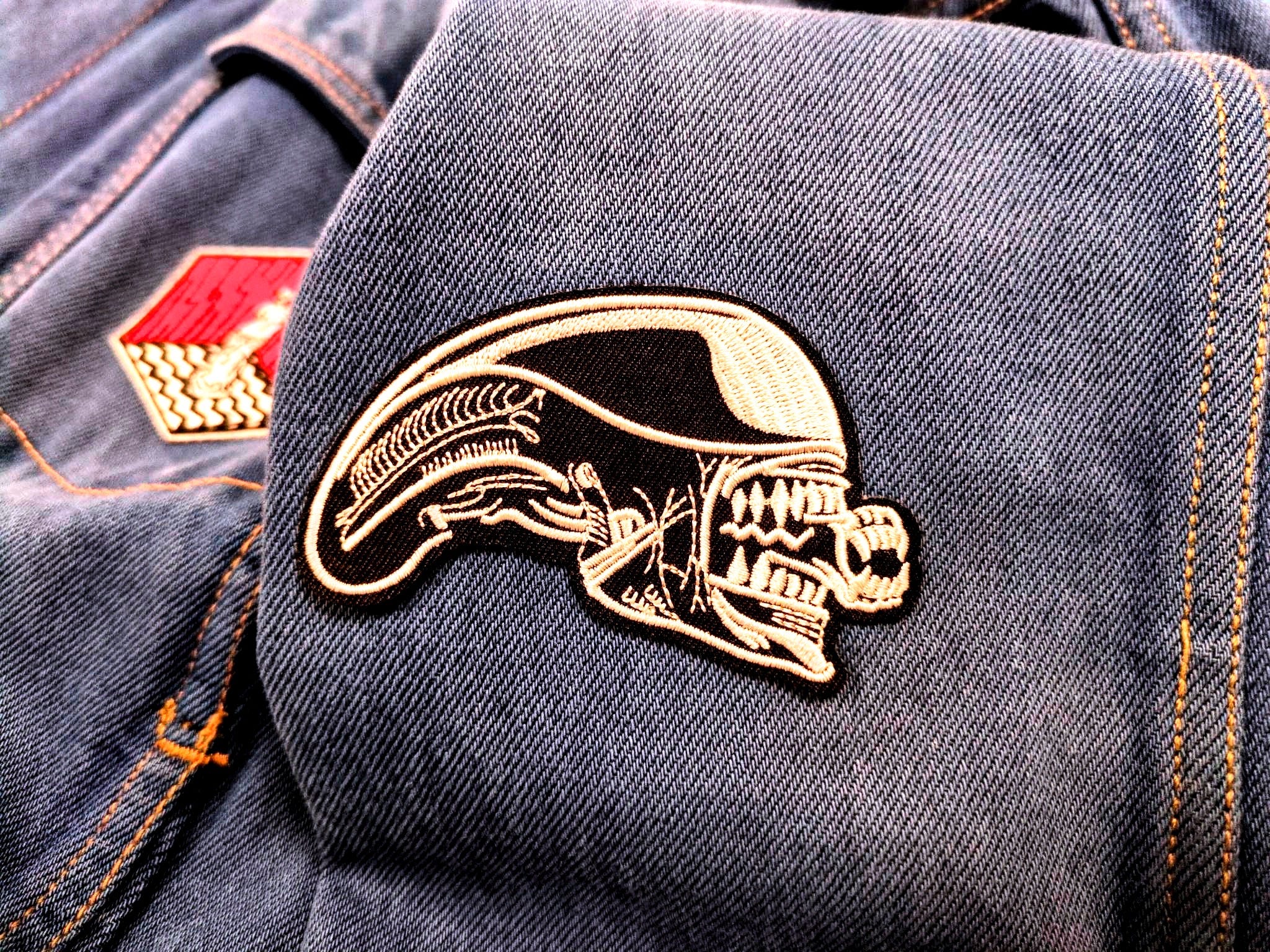
For example, I have a punk-rock denim jacket with patches I’ve haphazardly attached to it, as I’m not the world-renowned tailor I’m so often mistaken for [lie detected]. I even brought this jacket to Spain. But am I punk? Sure, I could find inner peace at a punk rock concert next to a dumpster wafting toxic fumes over the crowd on a sweet summer day. Punks are, by the way, much more welcoming than many people realize. While I could present shared symbols and appreciation of the natural punk habitat, they can tell I’m probably not going to rub blue margarita juice all over my face and scream into a microphone until my lungs collapse.
Though I straddle the line between nerd and punk, I know which side I land on. Comic book stores are my scene. Institutions of tabletop gaming? For sure my scene.
We all have scenes. Whether you’re staying in place, traveling, or moving abroad, these are the places you can go with minimal social friction — where long-term friends are made. They’re not a crutch, and you should always step outside them, but they’re where you start.
The nerd and punk scenes are INTERNATIONAL! like so many others, yet participating in them lets you absorb regional and national influences at a forgiving pace. Find your scenes. Find your people. Your crew.
Making the wrong impression in the wrong scene — we’ve all experienced that. The outcome can be not awesome. When you are treated as if you have shat upon someone’s doorstep, you will know that perhaps an urgent change of scenes is in order. For those like yours truly whose defining personality trait is causing faux pas shitstorms, I urge you to try. Just try. Try, for a moment, to not be an asshole. There’s an art to changing scenes without making matters worse…
That’s all for now. I’m changing scenes to the parque — while it’s not “PISSIN’ RAIN!” as men in wool caps randomly shout in Ireland, so I learned — to read a graphic novel.
Reese here from Bebop Libre: Like this post, and go forth to your scene.
An exception: store cards. Take the Día supermercado chain, for example. Should you shop there, the clerk will probably ask: “Tarjeta de Día?” That’s simply a request for a Día card. They ask for it first, and your payment method second.
Hi, Reese. People from Galicia are openly mocked by other Spaniards. They are assumed to be very distrustful… For example, if you meet a “gallega/o” on a stair, you will never get to know if she/he is going up or down…
I always scream INTERNATIONAL at the top of my lungs whenever I pay for stuff in Spain.
Even when I use cash.